Spinal cord injuries
Spinal cord injuries - compensation avenues in Queensland
In Queensland, if you suffer spinal cord injuries, such as quadriplegia or paraplegia, there are a number of different compensation avenues available to you. Some of these are available in parallel with each other. For example, if the injury happened in a motor vehicle accident, you can make a CTP claim and you can also receive benefits from the National Injury Insurance Scheme Queensland. In this comprehensive spinal cord injury compensation guide we explain your options. In spinal cord injury claims we act on a No Win No Fee basis and cap our fees at 25%.

Written and reviewed by Oszkar Denes, personal injury lawyer
READ MORE ABOUT ME HERE ›
On this page

Spinal cord injury and its impact
Spinal cord injuries, in particular quadriplegia and paraplegia, are catastrophic and life altering. Following initial medical treatment, fundamental questions arise about the long term needs of the injured victim and their family:
- What medical treatment and rehabilitation services are needed and who can provide them?
- What are the necessary home and vehicle modifications?
- Who will fund all of these expenses now and into the future?
Compensation avenues after a spinal cord injury in Queensland
CTP claim
If the injury happened in a motor vehicle accident caused by someone else, you can make a common law damages claim (also known as a CTP claim) against the negligent party.
Workcover claim
If the accident happened at work, you can claim compensation and potentially damages through the WorkCover Queensland or the relevant workers’ compensation insurer
Public liability claim
If the injury occurred in a public place due to somebody else’s negligence, you can make a claim for damages against the relevant public liability insurance company
NIISQ
You are eligible to receive treatment, care and support through the National Injury Insurance Scheme, Queensland – a no fault avenue
Super and TPD
You may be able to access your super and you may also receive benefits under your total and permanent disability insurance
NDIS
You may be able to receive supports through the NDIS. This is a Federal Government run program, which is separate from NIISQ
Read below about our 25% fee cap. We’d be happy to discuss your situation. Please reach out to us here.
Important information about compensation avenues after a spinal cord injury in Queensland
NIISQ
NIISQ stands for the National Injury Insurance Scheme, Queensland. It’s a Queensland Government run program. It’s designed to give benefits to people who suffered serious personal injury in a motor vehicle accident. The relevant legislation which governs the scheme is the National Injury Insurance Scheme (Queensland) Act 2016
This is a no-fault system. In other words, even if you were the driver and you caused the accident, you can receive benefits through NIISQ.
NIISQ doesn’t pay lump sum damages. Benefits received are in the form of treatment, care and support which they fund.
For spinal cord injury victims, NIISQ provides the following supports (by way of example):
- medical treatment and pharmaceuticals. For example, GP consults, surgery, diagnostic imaging such as radiology, pain management. Pharmaceuticals include prescription and over-the-counter medicines, medical devices and vitamins/supplements
- dental treatment. This can include a wide range of services including oral and maxillofacial surgery, prosthodontics, radiology, replacement of dentures and so on.
- home modifications, for example home automation such as automatic opening and closing doors
- motor vehicle modifications, such as wheelchair related modifications
- rehabilitation. The scope of available supports is very broad, for example: audiology services, dietetic supports, formulated food and feeding supports, exercise physiology, occupational therapy, optometry, podiatry, physiotherapy, psychology
- ambulance transportation
- attendant care: personal hygiene (showering, grooming), toileting, meal preparation, in and out of bed transfers and a range of other services. These also include in community support such as attending medical/therapy appointments, support during recreational activities
- domestic assistance services such as meal delivery, cleaning, dishwashing
- home and garden maintenance
- aged care services including for younger people in residential aged care
- assistive products and consumables (for example power wheelchairs)
- vocational and rehabilitation support such as resume writing, educational support
If you are eligible to NIISQ benefits, please note you may be able to also bring a common law damages claim (i.e. a CTP claim). This is in addition to receiving NIISQ supports. There are some important timeframes to make certain critical elections, which we deal with below.
CTP claim after a motor vehicle accident
A CTP claim can be made after a motor vehicle accident which occurs in Queensland. The claim is made against the CTP insurer of the at fault-driver. The legislation which governs the claim is the Motor Accident Insurance Act 1994.
The claim is for lump sum damages paid at the end of the claim process.
A CTP claim is a fault based claim. It’s available if the accident was at least partially somebody else’s fault. For example the person at fault may be:
- driver of another car
- driver of the car in which you were a passenger
If the accident was caused by someone else, but you were also negligent, you can still make a claim. This situation is known as contributory negligence. It means the damages award will be reduced by a certain percentage to take into account the extent of your negligence.
You can make a CTP claim even if the at fault person was driving an unregistered vehicle – but strict timeframes apply.
You can also make a claim even if the driver was a family member or a friend. Say the driver was your spouse. You can still claim damages, because you make the claim against the CTP insurer.
The insurance coverage is unlimited.
It’s important to understand that making a CTP claim is not the only available option. For example, in addition to making a CTP claim, you can also claim supports through the NIISQ. There are important timeframes which apply.
Workers’ compensation
You can claim through workers’ compensation if the injury happened at work. The relevant legislation which governs the claim is the Workers’ Compensation and Rehabilitation Act 2003.
The way in which a workers’ compensation claim works is this:
- in the first stage, WorkCover Queensland progressively supplies your medical treatment, care and support needs. For example, hospital treatment, aids and equipment such as a wheelchair, occupational therapy and so on. This part of the claim is a no fault system. These services can continue for an interim period of for life. Importantly, this is not a lump sum payment. This services provided in this first stage of the claim are very similar to those which NIISQ provides (see above) – in fact the workers’ compensation insurer can get the NIISQ agency to provide these services
- In addition to the above, if the accident was caused by someone’s negligence, you can bring a common law damages claim. This will made against WorkCover Queensland and the employer – but damages are paid by WorkCover. This part of your claim is fault based, and it’s for a lump sum payment.
The benefit in bringing a common law damages claim is that you receive significant extra payments. These are for:
- Pain and suffering
- Your loss of income – from the accident through to retirement age
- Loss of superannuation
- Cost of medical, rehabilitation and other out-of-pocket expenses
In addition, you may have the option to convert the treatment, care and support which WorkCover provides into an additional lump sum payment.
Public liability claim
If the accident happened in a public place (say for example at a hotel venue) then you can bring a public liability common law damages claim. It’s important to understand:
- this is a fault-based claim
- the claim is made against the at-fault party’s insurance company
- if the claim is successful, you receive a lump sum damages amount
- because the claim is made against the at fault party’s public liability insurance company, the available insurance coverage is not unlimited – though in many cases the available insurance coverage is sufficient.
One of the challenges in a public liability claim is that damages are paid at the end. The question is, how do you receive the necessary supports during the claim? There may be several options:
- you may be able to receive benefits through your super or TPD insurance, which provides funds for at least some medical treatment, care and support
- benefits may be available through the NDIS
- if there are more than one negligent parties, then you could make multiple claims running parallel to each other. For example, in some situations both your employer and a third party are negligent. In a case like this, you could make a public liability claim against the third party, and also a workers’ compensation claim against the employer and thereby immediately access medical treatment, care and support through the workers’ compensation insurer.
Damages
If you make a common law claim (whether a CTP claim, through WorkCover or public liability), the damages amount will likely be very significant. It will include the following (by way of example):
- pain and suffering: this amount is paid for the pain and suffering which you have and continue to experience due to your injuries
- loss of earnings: this is calculated from the date of accident, all the way to retirement age. Complex calculations are involved particularly for injured children and your people whose entire working life would still have been ahead of them
- lost superannuation contributions, which you would have earned on top of your income
- the value of care which you require, including care provided to you by friends and family
- the cost of various aids and equipment
- the cost of medical treatment, medication, allied health services
- for children and people with no legal decision making capacity: fund management costs to look after and protect the damages amount
NIISQ preservation notice
If your injury occurred in a motor vehicle accident, and someone else was at fault, you can receive benefits from NIISQ and also claim damages from the at fault driver’s CTP insurer. NIISQ benefits are provided continuously, while CTP damages are paid in one lump sum. For example, NIISQ would pay medical treatment costs as they arise, whereas your loss of income is paid and calculated as a one off lump sum damages amount.
If you don’t want to rely on NIISQ for funding of treatment and supports, you may have the option to convert these benefits to a lump sum damages payment. In this situation, experts calculate the total cost of your lifetime treatment, care and support needs, which you could then receive in one lump sum (in addition to other damages you receive as part of your CTP claim.)
It’s important to understand that if you want to exercise this option, you have to give a preservation notice to NIISQ and the CTP insurer. It’s called a preservation notice because you preserve your right to decide at the end of your CTP claim whether to convert your treatment supports into a lump sum payment, or whether you stay with NIISQ for these services. You only have a very brief period of time to give this preservation notice. Consult a lawyer before you bring a CTP claim so that you don’t miss the chance to give the preservation notice.
You might be wondering, which is better: stay with NIISQ so they keep funding your treatment, care and support needs, or alternatively, convert this into one lump sum. This is a significant issue. Each person’s situation needs to be considered on its own merits. There are several considerations:
- if you stay in the NIISQ system, you remain completely dependent on them. They have wide discretion in approving funding for various services. We don’t know how they will approach things in 10 years’ time, and whether it will be difficult to secure funding for things you need, or whether the system will run smoothly.
- If you convert to a lump sum, the money has to last for a lifetime. (And prices for services go up.)
- If you receive a lump sum amount, you need to be able to manage the money to make sure you don’t lose it.
- Your condition may change over time which means you may require more or less services as time goes on.
Claims by children
A particularly tragic situation is when children suffer life-altering injuries.
You should know that all of the compensation avenues discussed above are available for children. There are some unique considerations with respect to claims made on behalf of children:
- children need a litigation guardian to make a claim. In most cases this would be a parent. The parents then engage a lawyer to act on behalf of the child.
- claims on behalf of children may take longer. There are a variety of reasons for this, but basically it takes more time to work out the appropriate amount of damages as well as a child’s lifetime needs.
- the time limit to make certain claims are different than for adults.
- depending on when the matter is resolved, the settlement may need to be sanctioned by the court. In other words, a judge would review the settlement and then decide whether to approve it. This is to ensure that the terms of settlement serves the child’s best interests.
- it may be necessary to employ a fund manager to look after the damages amount – at least until the child attains the age of 18. This is expensive, and the costs should be added to the settlement.
Parallel claims
Some of the compensation avenues listed here are available in parallel with each other. For example:
- You can receive benefits from NIISQ and make a CTP claim
- Your injury may have occurred in circumstances where both your employer and a third party were at fault. You could make both a workers’ compensation claim and a public liability claim
It’s important to explore all available avenues and to claim from all potential sources. You may be eligible for an increased lump sum damages amount. In addition, you may be able to recover more for your legal costs.
Time limits to claim compensation
Please note, this is just general advice. The rules about timeframes and limitation periods are complicated and you should seek legal advice.
CTP claim
In CTP claims the following time limits apply:
- you must notify the CTP insurer of your claim within 9 months of the accident. In some cases, it’s not possible to comply with this. Your solicitors can advise you on the appropriate steps to ensure you can still bring a claim
- if the vehicle which caused the accident can’t be identified, notice must be given to the Nominal Defendant within 3 months. You should urgently seek legal advice in this case.
- A claim in court must be brought within 3 years. In some limited circumstances this can be extended by court order.
- Different (longer) timeframes apply to children and people under legal incapacity. For example to bring a claim in court a child generally has until 3 years after they attain the age of 18.
Workers’ compensation
You should notify WorkCover as soon as possible but within 6 months of the injury.
A claim in court can be made within 3 years of the accident. Before bringing a court claim, a notice of claim for damages must be given to the workers’ compensation insurer. If you give this notice before the limitation period expires, you may be able to bring a court claim even after the 3 year period.
Public liability claim
The following timeframes apply:
- give a notice of claim to the negligent party (and ideally their insurer) within 9 months of the injury. If you miss this, your lawyers can advise you on the appropriate steps to ensure you can still proceed
- a court claim must be commenced within 3 years.
- for children, and to extend the timeframe, see our comments above with respect to CTP claims
NIISQ
You have 12 months after the injury. Beyond that time period, NIISQ has discretion to accept the claim.
Oszkar’s perspective: Experience in spinal cord injury claims matters…
Acting for spinal cord injury victims
Having been engaged to act in several spinal cord injury matters, I know it’s important to understand and deliver practical solutions to the real-life issues that these cases present. Here are just a few examples:
It can be difficult to investigate the circumstances of the accident. The Police can take a long time to investigate. Coronial investigations might also take place if the incident involved fatality. There could be criminal proceedings on foot.
Some of these matters involve complex liability issues. Determining who was at fault is not always easy. In some situations the law is not yet completely settled. If I believe your claim has merits I will act for you on a no win no fee basis even if there are risks.
Estimating loss of earnings through to retirement age I work together with forensic accountants to model what the injured person’s earnings would have been if the accident had not happened. These calculations invariably involve multiple possible scenarios. For example, for clints who served in Defence or the police, the models take into account various possible future promotions and career trajectories – each of which comes with its own set of earnings and benefits.
Calculating the cost of lifetime care. I work with expert occupational therapists, rehabilitation specialists and spinal surgeons to ensure your short term and long term needs are properly assessed.
Conducting these claims involves significant out of pocket expenses. My firm funds these and you aren’t required to sign any litigation loans.
For clients in regional Queensland it’s important you know that I travel to your location so we have the opportunity to meet face to face. In fact, I have been acting for clients throughout Queensland, including Mackay, Port Douglas and even in Bedourie in outback Queensland (in addition to representing clients in the Brisbane and Greater Springfield area).

simple client agreement
25% cap on professional fees
In most personal injury matters, we offer to cap our professional fees at 25% of all inclusive settlements.
We don’t charge uplift fees and you don’t have to pay any expenses upfront.
There are some situation in which the 25% fee cap does not apply. Read our clear explanation below.
Frequently asked questions
Can I make a CTP claim against an uninsured driver or unregistred vehicle?
Yes, in Queensland you can. The claim is made against the Nominal Defendant. This is basically part of the Queensland Government. You have the same rights as if you made a claim against any other CTP insurer. But the timeframes to claim are shorter. It’s critical that you seek advice as soon as possible if a claim is not brought against the Nominal Defendant on time, you could be barred from seeking compensation.
I was told that the accident was my fault. Should I make a claim?
Many people don’t appreciate that sometimes more than one person is at fault. The accident may have been partially your fault and partially somebody else’s fault. In these circumstances you can still claim.
Also, some of the compensation avenues we discuss in this guide are no-fault schemes. For example, you can get NIISQ benefits even if you caused the accident.
A family member was driving the car. If I make a claim do they get in trouble?
Your claim would be made against the CTP insurer. This means the compensation amount is paid by the CTP insurer.
How long will the claim take?
A spinal cord injury compensation claim will take quite some time. Two to three years is realistic, but some claims can take longer. For example, if the claim is brought on behalf of the child, the process will take longer. Or, if the matter goes to trial then this will again result in a longer timeframe.
Does Denes Lawyers take my case on a No Win No Fee basis?
Yes, if we think your claim has merits, we act on a No Win No Fee basis. We cover all legal claim related expenses. Find out more on our dedicated page.
What is a NIISQ preservation notice?
It’s an official document which you give to NIISQ and the CTP insurer. By doing so you notify them that you preserve your right to decide at a later time whether you should convert your NIISQ treatment, care and support to a lump sum damages payment.
I engaged lawyers but I want to switch to Denes Lawyers. What should I do?
Please contact us and we will discuss your circumstances and your reasons to change lawyers. If we can act for you, we will organise a smooth transfer from your previous lawyers.
How much compensation can I get for spinal cord injury?
A person who suffered quadriplegia or paraplegia would receive a very significant amount in compensation. The total damages amount, including also the value of ongoing care and support needs, will likely be in the millions. In a common law damages claim, compensation includes an amount for pain and suffering, loss of earning capacity (including lost super), out-of-pocket expenses, and the value of medical care, medications, rehabilitation, home modifications, car modifications and a range of other supports.
Can I claim compensation if the injury happened at work?
Yes, you are entitled to compensation if the injury happened at work. You can make a workers’ compensation claim. The insurer will cover the cost of medical treatment, care and supports. If the injury was caused by the employer’s negligence, you can also make a common law claim for additional damages. The damages amount would be paid by the workers’ compensation insurer.
Can I receive NIISQ and compensation at the same time?
Yes, if the accident was caused by someone else’s negligence (at least in part) then you can claim both NIISQ treatment, care and supports as well as common law damages from the CTP insurer. The claims can run parallel with each other.
What if the accident was partly my fault?
If the accident was party your fault, you can still claim compensation. The damages amount will be reduced by a percentage to take into account the extent to which you were at fault (this is called contributory negligence). For example, there may be a 20% reduction to account for your contributory negligence.
Will I have to go to court?
Unlikely – most claims in Queensland are settled. That said, because the damages amount in spinal cord injury claims may be worth millions, insurers have more incentive to defend the claims in court – particularly if there is controversy as to who was at fault. This is why we prepare claims from the very beginning as if they went all the way to trial.
How long do I have to make a claim?
Generally, to make a claim in court, you have 3 years. However, there are a range of other timeframes which apply depending on the compensation avenue which you pursue. Some of the relevant timeframes are much shorter. For example, you need to notify NIISQ within 12 months. As another example, in a public liability claim, you have to give a Notice of Claim to the insurer within 9 months. Sometimes the deadlines can be extended and longer timeframes apply to children. It’s important to seek legal advice about the timeframes which apply to your specific situation.
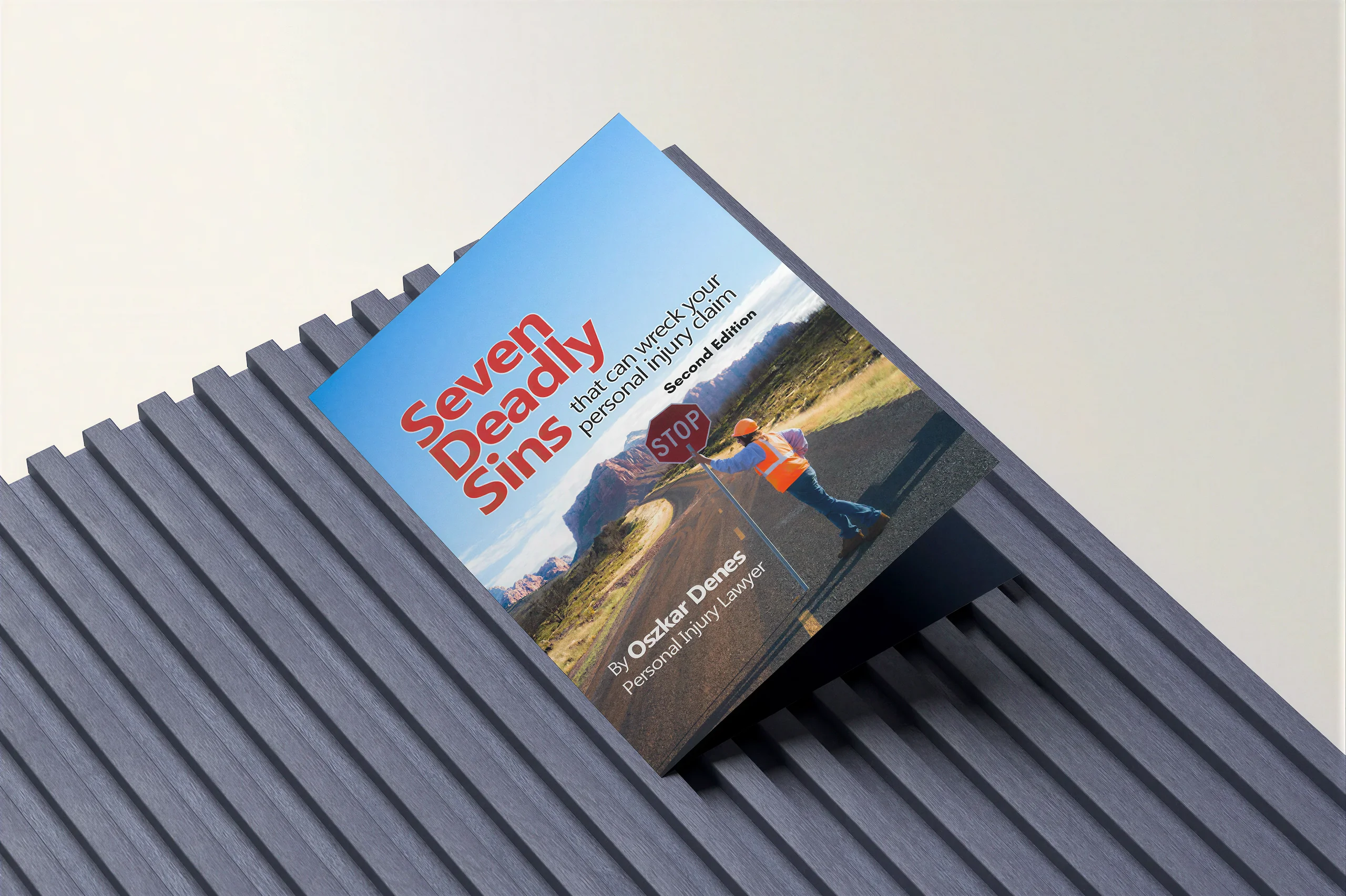
Free book offer – Seven Deadly Sins
If you’ve been injured in an accident, understanding your rights and the personal injury claims process can be overwhelming. Our free book, Seven Deadly Sins, provides clear, practical guidance to help you navigate your claim.
It covers common mistakes to avoid, key time limits, dealing with insurers, and how to maximise your compensation.
You don’t need to be a client to receive a copy.
Every client and case is unique—we’re here to help you make the right legal decisions.
Prefer to speak with someone directly?
Call us on (07) 3063 2268 and we’ll be happy to discuss your matter.
Contact us
Just fill out the form below. Please remember: anything you share with us is strictly confidential and will never be disclosed to anyone without your consent.
"*" indicates required fields