Spinal cord injury compensation in Queensland
Spinal cord injuries are catastrophic. Victims are left with permanent and life altering disabilities. The loss is devastating physically and emotionally, both for the victim and their family.
What is the spinal cord?
The spinal cord carries messages between your brain and body. It controls essential and basic bodily functions. Any damage to it can cause partial or complete loss of movement and sensation.
Classification of severe spinal cord injuries
When doctors classify the severity of a spinal cord injury, they use a standardised guide developed by the American Spinal Injury Association.
Level of injury
One of the things doctors look at is the level of the injury, which is the physical location of the injury on the spinal cord.
The spinal cord can be divided into 4 areas:
- Cervical: neck and upper back area
- Thoracic: upper to mid back
- Lumbar: lower-mid back
- Sacral: lower back
For example, when doctors assess the injury, they might say that the Neurological Level of Injury is T8. In this case, “T8” refers to the 8th thoracic spinal nerve, which is in the mid-back. Broadly speaking, injuries higher up the spinal cord tend to be more severe.
Complete vs incomplete injury
Another thing which doctors determine is whether the injury is complete or incomplete. If the injury is complete, it means the injured person has lost all muscle control, feeling and function below the injury level. By contrast, if the injury is incomplete, some feeling, function and muscle control remains.
Functional classification
Spinal cord injuries can also be classified depending on how much of the body is affected by the injury. Quadriplegia is the most severe. A person who suffers quadriplegia will lose function in all limbs. Paraplegia is a functional impairment of the legs.
Compensation for spinal cord injuries
If you suffered spinal cord injury through someone else’s fault, you can claim compensation. This involves bringing a negligence claim against the person who caused the injury, and their insurance company. For example, if you suffered injury in a motor vehicle accident, you can make a claim against the at fault driver and the CTP insurance company.
It’s important to note that there can be many causes of spinal cord injuries, not just car accidents. For instance, negligence on the part of a medical or nurse practitioner can cause such injuries. Sports and recreational activities can also result in these severe injuries.
What compensation is available?
In Queensland, compensation for spinal cord injuries is paid in one lump sum at the conclusion of your claim. Because the effects of the injury are so devastating, the amount of the compensation is very significant.
Cost of medical care, home care and home modifications
Spinal cord injuries are very expensive to treat. An injured person will need intensive medical care, followed by long term physiotherapy and ongoing care by spinal and other specialists. All of this is recoverable as part of the compensation claim – including all future costs covering the injured person’s life expectancy.
In addition, injured victims need ongoing home care, and home modifications. These are very expensive. Again, these costs (including ongoing future costs) can be claimed.
It is also possible to claim an amount of money for gratuitous care. This refers to the fact that friends and family members will care for the injured person, often for a lifetime. Although friends and family don’t charge for this, the monetary value of the care they provide gets assessed and can be recovered.
Pain and suffering
The defendant/insurance company must pay compensation for pain and suffering. This includes a monetary amount for the loss of enjoyment of life also.
Income loss (past and future)
Spinal cord injuries have a devastating effect on a person’s work capacity. They may not be able to return to any form of work. Any income loss between the date of the accident and the date of settlement is recoverable. In addition, income loss up to normal retirement age can also be recovered.
The calculation of income loss is a complex task, particularly for children and self-employed people, who may not have a track record of earnings based on which “usual earnings” are easy to calculate. Nevertheless, even for children who may never have worked before, future lost income can be calculated by reference to various expert evidence.
Loss of superannuation
On top of income loss, you can claim lost superannuation contributions. Again, this is both past and future. The rate at which this can be claimed may vary. For example, while the standard rate is 12%, in some occupations the actual rate paid to workers is higher.
Other items
Depending on the circumstances, there may be a range of other aspects of the compensation claim. For example, it may be that the injured person doesn’t have the ability to manage their own finances. In this case, professional financial managements costs are added to the claim.
Legal costs
Notable, the defendant/insurance company must also contribute to the injured person’s legal costs incurred in bringing the compensation claim. This contribution may be significant.
The role of NIISQ
The National Injury Insurance Scheme is a Queensland based no-fault Scheme. It provides treatment and care to any person who suffers serious injuries in a motor vehicle accident in Queensland.
What’s a no-fault scheme?
In short, it’s a scheme which you can participate in regardless of fault. Let’s say you are driving a car on your own, you fall asleep at the wheel, crash into a tree and suffer severe spinal cord injury. No other vehicle is involved. In this case, there is no other at-fault driver. As the injured person, you can participate in the scheme (provided other eligibility criteria are met.)
NIISQ and compensation claims
It’s very important to understand that if your injury was someone else’s fault, you can participate in NIISQ and claim compensation from the CTP insurance company of the at fault driver.
Does a compensation claim pay more than NIISQ?
NIISQ doesn’t cover everything that you can receive in a compensation claim. For example, NIISQ doesn’t pay for income loss – which is a big part of your loss.
In addition, even if you are a NIISQ participant, it is still possible to recover, as part of your compensation claim, a lump sum which covers treatment expenses, rehabilitation, the cost of aids and appliances etc. However, you must “preserve your rights” to do so. There are strict time limits which your lawyer can advise you on.
How can a lawyer assist me?
If you suffered spinal cord injury, it’s very important to seek advice from a lawyer who is experienced in these types of claims. There are many pitfalls and issues which a lawyer who doesn’t practice in this area will struggle with. For example:
- The interaction between a compensation claim and NIISQ, and how to protect your rights.
- Access to expert witnesses: Spinal cord injury claims involve numerous expert witnesses, including spinal surgeon, occupational therapists, psychiatrists, dieticians and many more. An experienced lawyer can identify the experts who can maximise the value of your claim.
- Time limits: There are several very important time limits applying to spinal cord injury claims. Missing one may have very significant consequences, including potentially losing your right to compensation.
- Costs: building a strong case takes time and it is costly. An experienced lawyer will fund all of the claim expenses, and will have the patience to pursue your claim, potentially over several years.
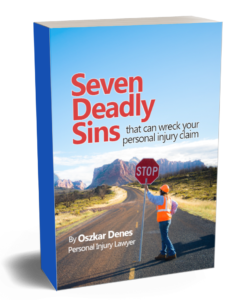
Free book offer: what to expect in your injury claim
Many firms try to rush you to sign up with them without carefully considering your options. We encourage you to first learn about your personal injury claim. You should ask yourself:
- How do you calculate your compensation amount?
- How should you choose your lawyer? Do you just choose by firm name regardless of who is really in charge of your matter? Has your lawyer ever argued a case in court?
- What is a no win – no fee agreement? How much will it cost?
Our book is available to you free of charge. You don’t have to be a client to receive this book. Head to the order page and we will be happy to send you a copy straight away.

Liability limited by a scheme approved under professional standards legislation